Post-Minimalism in Film Music
Written for the University of Hertfordshire. (2026)
1. Introduction
Minimalism originated in the United States during the 1960s as an avant-garde response to the complexity of Modernism. Through the work of La Monte Young, Terry Riley, Steve Reich and Philip Glass, a new musical language was consolidated, defined by Musematic Repetition in melody and rhythm, Harmonic Stasis, and Textural Layering in Additive Processes, Orchestral Layering and Micro-Variation (Potter, 2024). These parameters created a distinct compositional toolkit whose apparent simplicity contradicted its rigorous internal organisation (Gann, Potter and Siôn, 2024).
By the late 1970s, Minimalism had evolved into Post-Minimalism, a development that preserved the core parameters while relaxing its strict procedural logic (Evans, 2024). Increased harmonic flexibility, more expressiveness, and a release from purely linear additive processes enabled the style to adapt to a broader range of dramatic and emotional contexts (Doran Eaton, 2024). This shift marked a transition from experimental austerity to a more versatile, narratively responsive language (Doran Eaton, 2024).
The cinematic adoption of this style — from early avant-garde works such as Koyaanisqatsi (1982) to contemporary mainstream scoring such as The Crown (2023) — reflects its growing acceptance as an effective tool for shaping narrative experience (Doran Eaton, 2024). In this research paper, we will examine how the core parameters of Post-Minimalism function as structural devices to shape a film’s narrative.
2. Foundational Parameters
‘Foundational Parameters’ explores how the inherent lack of traditional narrative drive in Post-Minimalist music creates a new structural function within the film’s narrative shape.
2.1. Musematic Repetition: Narrative Synergy
Musematic Repetition refers to the continual recurrence of short motivic fragments in melody and rhythm, forming the most immediately recognisable marker of the Post-Minimalist language (Leydon, 2002). Its brevity and circular design allow ideas to be reiterated with minimal transformation, producing a surface of steady recurrence that is both predictable and structurally durable (Evans, 2024).
This constant reiteration generates a rhythmic impetus that compensates for the absence of traditional harmonic direction, encouraging perceptual momentum even when the harmonic field remains static. Biologically, the repetitive sequencing engages our procedural memory systems associated with habit formation, fostering a heightened sense of temporal suspension and a sense of being carried through the material (Hellmuth Margulis, 2013). Therefore, cognitively, the motivic cycle stabilises attention and enhances pattern recognition, thereby producing a shift towards immersion (Hellmuth Margulis, 2013).
Given that Musematic Repetition can be extended almost indefinitely without structural fatigue, it is well-suited to film scores, as it provides narrative synergy (Doran Eaton, 2024). Musematic Repetition can bridge gaps in narrative spaces and imbue musical ideas with significance for the audience. Ultimately, repeating cells bind ideas and events into a coherent temporal flow, shaping the film’s overall narrative (Wang, 2025).
2.2. Harmonic Stasis: Narrative Continuity
Post-Minimalist writing restricts its harmonic resources to a narrow pitch set, often sustaining a chord or cycling through a small diatonic or modal progression. This restraint produces a harmonic field that is stable, centred and slow-moving, allowing the music to operate as an environment rather than a sequence of functional events. The result is a texture in which harmonic change becomes incidental rather than directional (Evans, 2024).
Such Harmonic Stasis challenges conventional narrative expectations. In traditional Western scoring practice, harmonic progressions — particularly cadence-driven motions from tension to resolution — articulate the dramatic shape and temporal unfolding of the story (Doran Eaton, 2008). By contrast, a Post-Minimalist harmonic approach tends not to breathe, avoiding teleological markers, downplaying arrival points, and withholding the forward pull generated by functional motion (Evans, 2024). This anti-teleological design reconfigures the behaviour of time, replacing goal-oriented development with a steady-state continuum (Wang, 2025).
Paradoxically, this absence of functional drive becomes narratively useful. On the one hand, the lack of immediate, transparent emotional signification can foster a degree of detachment, enabling directors to frame scenes with a cool, observational distance (Wang, 2025). Yet Harmonic Stasis is not limited to that effect. Its harmonic neutrality can also serve as a foundational backdrop that stabilises shifting visuals, supports thematic continuity, and binds disparate narrative moments into a unified perceptual field, thereby sustaining narrative continuity (Wang, 2025).
3. Dynamic Structural Parameters
‘Dynamic Structural Parameters’ explores the Post-Minimalist elements that enable fine-grained narrative management, using case studies to demonstrate how they shape narrative.
3.1. Additive Processes: Thematic Narration
Within a Post-Minimalist framework built on Musematic Repetition and Harmonic Stasis, Additive Processes become the principal site of dynamism. Additive Process techniques involve the incremental expansion or reduction of pitch or rhythmic units by small, discrete amounts (Evans, 2024). Unlike Micro-Variation, which alters internal details while preserving the overall profile, Additive Processes modify the size or duration of the core unit itself. Because these adjustments reshape the underlying motivic cell, their effects are more immediately perceptible (Hellmuth Margulis, 2013), making them effective for signalling structural shifts within a cue.
Functionally, Additive Processes articulate intensification and release at key narrative junctures. By gradually enlarging or contracting a musical idea, the score can mirror changes in dramatic tension, psychological escalation or thematic transformation (Wang, 2025). Thus, the technique becomes a mechanism for deepening narrative meaning: musical material accumulates or erodes, tracing the scene's emotional trajectory with heightened clarity (Doran Eaton, 2008).
A clear example appears in Philip Glass’s cue from The Hours (2002): Dead Things (Glass, 2002). Here, the progressive reduction of a motivic figure — from five notes to three to none — creates an additive pitch process that parallels the film’s meditation on the ultimate insignificance of human life (Wang, 2025). The motive’s steady contraction enacts a musical movement from existence to nonexistence, while the subtle rhythmic expansion and contraction reinforce the scene’s philosophical descent. Through this process, additive change becomes a narrative analogue, intensifying the film's thematic depth in specific cues and its micro-continuity (Wang, 2025).
3.2. Orchestral Layering: Experiential Narration
Lesser than Additive Processes, Orchestral Layering refers to the stacking of subtle textures that provide the music with a flexible textural density that can expand or contract without disrupting its underlying stability (Evans, 2024). This continuous fabric allows the score to function as an aural bridge (Fink, 2005), intensifying the meaning of the core or smoothing the passage between shots, scenes, or settings while maintaining a unified sonic identity (Doran Eaton, 2008).
Orchestral Layering functions as a structural tool for articulating narrative complexity, especially in films driven by evolving character arcs (Wang, 2025). Its influence within Post-Minimalist scoring is evident even in the works of John Williams, whose traditionally romantic idiom incorporates this technique in 2001’s A.I.: Artificial Intelligence (Doran Eaton, 2008). In Hide and Seek (Williams, 2001), he charts the mother’s shifting perception of the robot boy, David, by transforming a sparse, mechanically precise motif into a progressively richer texture. As additional layers — such as the entry of a French horn — soften the motif’s synthetic edge, the music mirrors her emotional acceptance (Doran Eaton, 2008). Here, Orchestral Layering becomes more than a colouristic technique: it serves as a narratological device, binding emotional states and story trajectories into a unified, expressive arc (Wang, 2025).
3.3. Micro-Variation: Affective Narration
Micro-Variation refers to the introduction of subtle alterations in pitch, rhythm or harmonic detail while preserving the fundamental constants of the texture. These small shifts occur against a stable repetitive surface, allowing composers to generate fine-grained affective cues without disrupting continuity (Gann, Potter and Siôn, 2024). In film scoring, this technique sustains emotional tone over long spans while providing nuanced adjustments that track mood or narrative direction (Fink, 2005).
Micro-Variation works as a precise mechanism for articulating character-driven narrative development (Wang, 2025). By subtly reshaping the contour of a motivic cell, composers can mirror shifts in a character’s psychology while maintaining thematic coherence (Doran Eaton, 2008). In A Beautiful Mind (2001), the controlled stepwise mutations of the repetitive cells in A Kaleidoscope of Mathematics (Horner, 2001) reflect John Nash’s evolving logic (Doran Eaton, 2008). Similarly, in The Dark Knight Rises (2012), Zimmer’s incremental alterations to the ostinato in Rise (Zimmer, 2012) reinforce the conclusion of Batman’s arc, incorporating Post-Minimalism within a Neo-Romantic score (Gilmartin, 2019), providing a stronger, finer-grained shaping of the narrative’s form. Because the underlying cells remain familiar, each Micro-Variation becomes perceptible, creating a tight expressive link between character and narrative while limiting the score’s surface density (Wang, 2025).
Micro-Variation also manages tension through restrained harmonic inflexion. In cues such as For Your Own Benefit (Glass, 2002), recurring semitone appoggiaturas and major-seventh colourations introduce local dissonance that resists cadence–like closure (Wang, 2025). These minute harmonic disturbances sustain psychological unease in Woolf’s suicidal thoughts while the surface repetition remains fixed, demonstrating how Micro-Variation can shape narrative tension through a character’s development while enhancing structural continuity (Wang, 2025).
4. Conclusion
The core parameters of Post-Minimalism — Musematic Repetition, Harmonic Stasis, and Textural Layering — form a precise and economical alternative to the conventions of the Romantic scores (Potter, 2024). Musematic Repetition supplies synergy by creating organic unity in long-form narrative; Harmonic Stasis provides a stable frame; and the Textural Layering refines coherence and affect with measured clarity. In combination, these elements constitute a structural toolkit uniquely suited to contemporary cinematic narratives (Doran Eaton, 2024).
Furthermore, rather than producing monotony, Post-Minimalist scores counter critical stereotypes by revealing how stability, repetition, and small units of change can articulate complex and fragmented storytelling with unusual precision (Wang, 2025). Still, composers must be aware of the detailed internal organisation Post-Minimalism demands, so its superficial simplism can break through and truly elevate the narrative’s shape (Fink, 2005).
Ultimately, Post-Minimalism enables the score to serve as an additional form of narrative architecture, underpinning the film’s structural framework as conventional musical signposts recede (Doran Eaton, 2008). Building on that, this research paper develops a theoretical framework for studying Post-Minimalism’s effects on shaping a film’s narrative, yet it draws solely on examples from four films. Thus, further research is required to test the framework across a broader range of films, exploring its limitations by comparing its effects with stylistically contrasting scores on a film’s narrative.

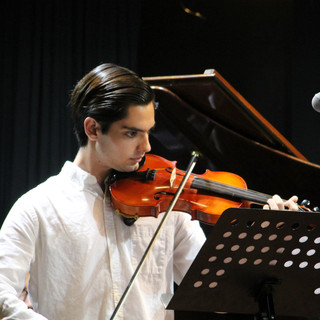
From Guild Hall by Fernando Aceves (2019)
A Beautiful Mind. (2001). Universal Pictures and DreamWorks Pictures.
A.I.: Artificial Intelligence (2001). Warner Bros. Pictures.
Doran Eaton, R.M. (2024). Minimalist and Post-Minimalist Music in Multimedia: From the Avant-Garde to the Blockbuster Film. In: The Ashgate Research Companion to Minimalist and Postminimalist Music. England: Routledge, pp.181–200.
Doran Eaton, R.M. (2008). Unheard Minimalisms: The Functions of the Minimalist Technique in Film Scores. [PhD] Available at: https://repositories.lib.utexas.edu/server/api/core/bitstreams/6574e367-fbf6-47dd-af1b-1f8e30534b90/content [Accessed 10 Nov. 2025].
Evans, T. (2024). Analysing Minimalist and Post-Minimalist Music: An Overview of Methodologies. In: The Ashgate Research Companion to Minimalist and Postminimalist Music. England: Routledge, pp.241–257.
Fink, R. (2005). Repeating Ourselves: American Minimal Music as Cultural Practice. University of California Press.
Gann, K., Potter, K. and Siôn, P. (2024). Introduction: Experimental, Minimalist, Post-Minimalist? Origins, Definitions, Communities. In: The Ashgate Research Companion to Minimalist and Postminimalist Music. England: Routledge, pp.1–16.
Gilmartin, A. (2019). Know The Score: Minimalism Meets Film Music. [online] Film Independent. Available at: https://www.filmindependent.org/blog/know-the-score-minimalism-meets-film-music/ [Accessed 2 Dec. 2025].
Glass, P. (2002). Dead Things. Elektra and Nonesuch. Available at: https://www.youtube.com/watch?v=iOMt94yW3j4 [Accessed 15 Nov. 2025].
Glass, P. (2002). For Your Own Benefit. Elektra and Nonesuch. Available at: https://www.youtube.com/watch?v=MJlFCEAr3Fg [Accessed 15 Nov. 2025].
Hellmuth Margulis, E. (2013). Repetition and Emotive Communication in Music vs. Speech. Frontiers Psychology, [online] 4(167). Available at: https://www.frontiersin.org/journals/psychology/articles/10.3389/fpsyg.2013.00167/full [Accessed 10 Nov. 2025].
Horner, J. (2001). A Kaleidoscope of Mathematics. Decca Records. Available at: https://www.youtube.com/watch?v=eamiiuUmVz8 [Accessed 2 Dec. 2025].
Leydon, R. (2002). Towards a Typology of Minimalist Tropes. Music Theory Online: A Journal of the Society for Music Theory, 8(4).
Potter, K. (2024). Mapping Early Minimalism. In: The Ashgate Research Companion to Minimalist and Postminimalist Music. England: Routledge, pp.19–37.
The Dark Knight Rises. (2012). Warner Bros. Pictures, Legendary Pictures, DC Entertainment and Syncopy Inc.
The Hours. (2002). Paramount Pictures and Miramax.
Wang, B. (2025). Music and Narrative: Philip Glass’s Post-Minimalist Technique in The Hours Interacts with the Structure of the Film. MDPI, [online] 14(5). doi:https://www.mdpi.com/2076-0752/14/5/117.
Williams, J. (2001). Hide and Seek. Warner Sunset and La-La Land Records. Available at: https://www.youtube.com/watch?v=a3HdPwiM8P8 [Accessed 2 Dec. 2025].
Zimmer, H. (2012). Rise. WaterTower and Sony Classical. Available at: https://www.youtube.com/watch?v=HGx9ZZ9wMxc [Accessed 2 Dec. 2025].


